Lithium Battery সহজ ভাষায় — Complete Compact Guide
শেয়ার
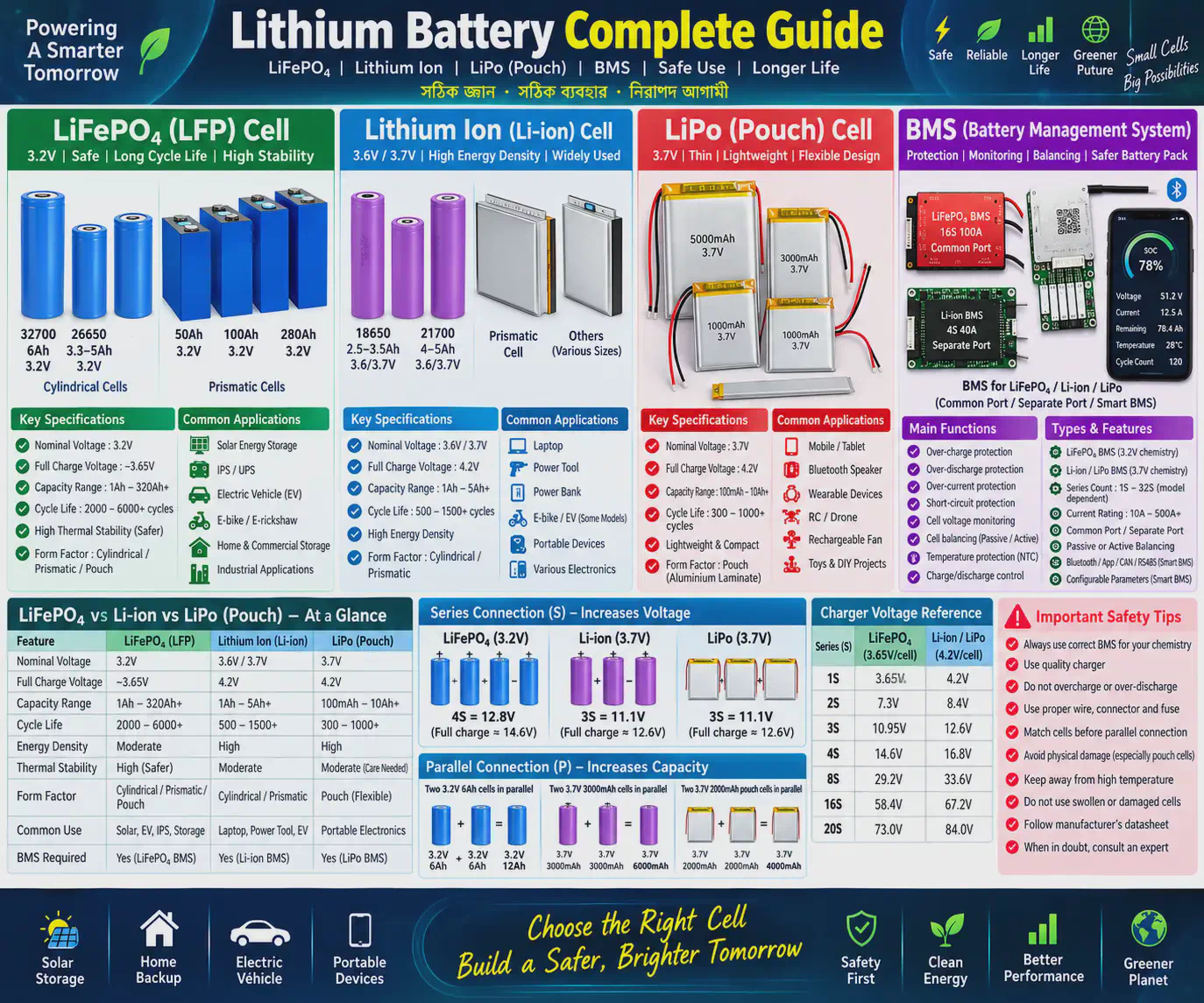
🔋 Lithium Battery সহজ ভাষায় — Complete Compact Guide
Lithium Battery বুঝতে হলে প্রথমে একটি কথা মনে রাখুন:
Battery শুধু Volt আর Ah নয়।
একটি ভালো battery system নির্ভর করে:
Cell Chemistry + Capacity + Current Capability + BMS + Charger + Wiring + Safety + Pack Design
এই লেখায় এগুলো একদম সহজভাবে বুঝানো হলো।
১. Battery Cell কী?
Cell হলো battery-এর সবচেয়ে ছোট মূল unit।
একটি cell-এর সঙ্গে আরও cell series বা parallel করে বড় battery pack তৈরি করা হয়।
উদাহরণ:
একটি LiFePO₄ cell:
3.2V 100Ah
চারটি series করলে:
12.8V 100Ah
১৬টি series করলে:
51.2V 100Ah
২. Lithium Battery সব এক ধরনের নয়
Lithium battery-এর বিভিন্ন chemistry আছে।
সবচেয়ে পরিচিত:
🟢 LiFePO₄ / LFP
Nominal voltage: প্রায় 3.2V
Full charge: প্রায় 3.65V
ব্যবহার:
Solar
IPS
UPS
EV
Energy Storage
বিশেষত্ব:
ভালো cycle life
ভালো thermal stability
বড় storage system-এর জন্য জনপ্রিয়
🔵 Lithium-ion
অনেক conventional Li-ion cell:
Nominal voltage:
3.6V বা 3.7V
Full charge:
প্রায় 4.2V
Common formats:
18650
21700
ব্যবহার:
Laptop
Power Bank
Power Tool
E-bike
Portable electronics
বিশেষত্ব:
High energy density
🔴 LiPo / Pouch Cell
LiPo battery সাধারণত চ্যাপ্টা pouch-এর মধ্যে থাকে।
Typical voltage:
Nominal:
3.7V
Full charge:
4.2V
ব্যবহার:
Rechargeable fan
Bluetooth speaker
Power bank
Toys
Wearable
Drone
Portable electronics
Pouch cell-এর সুবিধা:
পাতলা
হালকা
বিভিন্ন shape ও size-এ পাওয়া যায়
⚠️ Pouch cell puncture বা crush করা বিপজ্জনক।
৩. Cylindrical, Prismatic ও Pouch কী?
এগুলো মূলত cell-এর physical design।
Cylindrical
গোলাকার।
উদাহরণ:
18650
21700
32700
Prismatic
বড় rectangular cell।
উদাহরণ:
3.2V:
100Ah
105Ah
200Ah
280Ah
304Ah
314Ah
Pouch
Soft aluminium-laminate packaging।
Capacity হতে পারে:
500mAh থেকে কয়েক Ah বা তারও বেশি।
৪. Volt, Ampere, Ah, Watt ও Wh
Battery বুঝতে এই পাঁচটি জিনিস অবশ্যই জানতে হবে।
Volt — V
Battery-এর voltage।
উদাহরণ:
3.2V
12.8V
51.2V
64V
Ampere — A
Battery থেকে বর্তমানে কত current প্রবাহিত হচ্ছে।
উদাহরণ:
Motor যদি 50A নেয়:
Current = 50A
Ah
Ah = Ampere-hour
Battery capacity।
100Ah battery এবং 100A current একই বিষয় নয়।
Example
Battery:
100Ah
Load current:
20A
Simple theoretical calculation:
100 ÷ 20
≈ 5 hours
বাস্তবে efficiency ও cutoff-এর কারণে সময় কম হতে পারে।
৫. Watt এবং Wh
Power
W = V × A
উদাহরণ:
48V × 50A
= 2400W
Stored Energy
Wh = V × Ah
Example:
12.8V × 100Ah
= 1280Wh
= 1.28kWh
51.2V × 100Ah
= 5.12kWh
64V × 195Ah
= 12.48kWh
📌 Battery compare করার সময় শুধু Ah নয়, Wh/kWh দেখাও গুরুত্বপূর্ণ।
৬. Series Connection কী?
Series করলে:
✅ Voltage বাড়ে
❌ Ah বাড়ে না
Example:
চারটি:
3.2V 100Ah
series করলে:
Voltage:
3.2 × 4
= 12.8V
Capacity:
100Ah
Pack:
12.8V 100Ah
16S Example
16 × 3.2V
= 51.2V
100Ah cell হলে:
51.2V 100Ah
20S Example
20 × 3.2V
= 64V
195Ah cell হলে:
64V 195Ah
৭. Parallel Connection কী?
Parallel করলে:
✅ Ah বাড়ে
✅ Current capability বাড়তে পারে
❌ Voltage বাড়ে না
Example:
দুটি:
3.2V 6Ah
parallel করলে:
3.2V 12Ah
৮. 4S2P মানে কী?
4S2P মানে:
4 series
এবং প্রতিটি series group-এ 2 parallel cell।
প্রতি cell:
3.2V 6Ah
Voltage:
4 × 3.2
= 12.8V
Capacity:
2 × 6
= 12Ah
Final pack:
12.8V 12Ah
মোট cell:
4 × 2
= 8টি
৯. C-Rate কী?
C-rate দেখায় battery capacity-এর তুলনায় কত current ব্যবহার হচ্ছে।
Example
100Ah battery:
1C = 100A
0.5C = 50A
2C = 200A
6Ah cell:
1C = 6A
2C = 12A
⚠️ Cell 2C দিতে পারবে কিনা datasheet দেখে জানতে হবে।
১০. বেশি Ah মানেই কি ভালো Cell?
না।
ধরুন:
Cell A:
3500mAh
Maximum current:
10A
Cell B:
2500mAh
Maximum current:
25A
High-power device-এর জন্য Cell B ভালো হতে পারে।
অর্থাৎ:
Capacity এবং Power capability আলাদা বিষয়।
১১. Internal Resistance বা IR
প্রতিটি cell-এর ভেতরে কিছু resistance থাকে।
একে বলে:
Internal Resistance
IR বেশি হলে:
Voltage sag বাড়ে
Heat বাড়ে
Power loss হয়
High-current performance কমে
১২. Voltage Sag কী?
Battery resting অবস্থায়:
52V
Motor চালালে:
47V
এভাবে load-এর সময় voltage কমে যাওয়াকে বলে:
Voltage Sag
কারণ হতে পারে:
Cell IR বেশি
Battery low
Thin cable
Weak connection
Weak cell
BMS limitation
১৩. SOC কী?
SOC = State of Charge
Battery-তে কত charge বাকি আছে।
Example:
100% SOC = প্রায় full
50% SOC = প্রায় অর্ধেক
20% SOC = low
Smart BMS SOC estimate করতে পারে।
১৪. SOH কী?
SOH = State of Health
Battery নতুন অবস্থার তুলনায় এখন কতটা healthy।
Example:
Rated battery:
100Ah
Test করে পাওয়া গেল:
80Ah
Capacity-based rough SOH:
80%
১৫. DoD কী?
DoD = Depth of Discharge
100Ah battery থেকে 80Ah ব্যবহার করলে:
DoD ≈ 80%
সাধারণভাবে খুব deep discharge battery degradation বাড়াতে পারে।
১৬. Cycle Life কী?
একবার charger লাগানো মানেই সবসময় 1 cycle নয়।
Example:
আজ 50% ব্যবহার করলেন।
আগামীকাল আবার 50%।
দুটো মিলিয়ে প্রায়:
1 equivalent full cycle
Manufacturer যদি বলে:
6000 cycles
তাহলে দেখুন:
কত DoD?
কত C-rate?
Temperature কত?
End capacity কত ধরা হয়েছে?
১৭. BMS কী?
BMS = Battery Management System
এটি battery pack-এর electronic protection এবং management system।
BMS model অনুযায়ী করতে পারে:
Overcharge protection
Over-discharge protection
Over-current protection
Short circuit protection
Cell voltage monitoring
Temperature monitoring
Cell balancing
Charge/discharge control
১৮. BMS-এর 4S, 16S, 20S মানে কী?
S = Series
LiFePO₄
4S:
4 × 3.2
= 12.8V
16S:
= 51.2V
20S:
= 64V
১৯. সব BMS কি একই?
না।
LiFePO₄ BMS এবং conventional 3.7V Li-ion BMS-এর voltage settings আলাদা।
কারণ:
LiFePO₄ full charge:
≈ 3.65V
Li-ion:
≈ 4.2V
সুতরাং BMS নির্বাচন করতে হবে:
Chemistry + S count + Current
এই তিনটি দেখে।
২০. BMS-এর 50A, 100A, 200A কী?
এগুলো BMS current rating।
Battery Ah নয়।
Example:
16S 100A LiFePO₄ BMS
মানে:
16S LFP pack
Nominal প্রায় 51.2V
Specified current rating 100A
কিন্তু datasheet-এ দেখুন:
Continuous current
Peak current
Peak duration
Charge current
২১. Battery 100Ah হলে কি 100A BMS লাগবে?
অবশ্যই নয়।
Example:
51.2V battery
Load:
3000W
Current:
3000 ÷ 51.2
≈ 58.6A
কিন্তু motor বা inverter peak current 100A-এর বেশি নিতে পারে।
তাই BMS নির্বাচন করতে হবে:
Actual load + Peak load + Cell capability
দেখে।
২২. Cell Balancing কী?
Series pack-এর সব cell-এর voltage এক না হলে imbalance হয়।
Example:
Cell 1 = 3.45V
Cell 2 = 3.44V
Cell 3 = 3.38V
Cell 4 = 3.46V
Cell 3 পিছিয়ে আছে।
এটি ঠিক রাখতে balancing ব্যবহার করা হয়।
Passive Balancing
Higher-voltage cell-এর সামান্য energy heat হিসেবে নষ্ট করে।
Active Balancing
এক cell থেকে অন্য cell-এ energy transfer করে।
২৩. Smart BMS কী?
Smart BMS-এ থাকতে পারে:
Bluetooth
CAN
RS485
UART
App থেকে দেখা যায়:
Cell voltage
Pack voltage
Current
Temperature
SOC
Alarm
Cell difference
২৪. Charger কীভাবে নির্বাচন করবেন?
Charger অবশ্যই battery chemistry অনুযায়ী হতে হবে।
LiFePO₄
Per cell maximum reference:
≈3.65V
4S:
4 × 3.65
= 14.6V
16S:
= 58.4V
20S:
= 73V
Conventional Li-ion
Per cell:
≈4.2V
3S:
= 12.6V
4S:
= 16.8V
⚠️ Exact specification manufacturer datasheet অনুযায়ী নিতে হবে।
২৫. CC/CV Charging কী?
অনেক lithium battery charger:
CC/CV
method ব্যবহার করে।
CC
Constant Current
প্রথমে নির্দিষ্ট current-এ charge।
CV
Constant Voltage
Battery full-charge voltage-এর কাছে গেলে voltage constant থাকে এবং current কমতে থাকে।
২৬. Charger Current
100Ah battery-তে:
20A charger
= 0.2C
50A charger
= 0.5C
কিন্তু cell manufacturer কত charging current অনুমোদন করে সেটাই final।
২৭. Battery Runtime হিসাব
Battery:
51.2V 100Ah
Energy:
51.2 × 100
= 5120Wh
Load:
1000W
Ideal runtime:
5120 ÷ 1000
= 5.12 hours
যদি efficiency 90% হয়:
5120 × 0.90
= 4608Wh
Runtime:
≈ 4.6 hours
বাস্তবে আরও কিছুটা variation হতে পারে।
২৮. Cell Matching কেন দরকার?
একই pack-এর cells ideally হওয়া উচিত:
Same chemistry
Same model
Similar capacity
Similar IR
Similar age
Similar SOC
Example:
16টি 100Ah cell-এর মধ্যে একটি যদি আসলে 70Ah হয়, সেটি পুরো pack-এর usable capacity সীমিত করতে পারে।
২৯. Grade A / Grade B
Seller “Grade A” বললেই সেটি প্রমাণ নয়।
যাচাই করুন:
Manufacturer
Model
QR
Production date
Capacity
IR
Physical condition
Measured data > Grade sticker
৩০. Used / Recovered Cell
পুরনো EV বা battery pack থেকে cell খুলে আবার বিক্রি করা হতে পারে।
Potential problems:
Capacity কম
IR বেশি
Unequal aging
Unknown history
Used cell usable হতে পারে, কিন্তু নতুন cell হিসেবে ধরা যাবে না।
৩১. Fake Capacity
বিশেষ করে unknown 18650 cell-এর গায়ে:
7000mAh
8800mAh
9900mAh
লেখা থাকলে সতর্ক হন।
Check:
Official datasheet
Weight
Capacity test
IR
Manufacturer
৩২. Capacity Test
Actual capacity জানার concept:
Correctভাবে charge
Controlled current-এ discharge
Correct cutoff পর্যন্ত
কত Ah এবং Wh পাওয়া গেল measure করা
Example:
Rated:
100Ah
Test:
95Ah
Actual measured capacity:
≈ 95Ah
৩৩. Temperature কেন গুরুত্বপূর্ণ?
High temperature:
Battery aging বাড়ায়
Heat বাড়ায়
Safety risk বাড়াতে পারে
Low temperature:
Current capability কমায়
Voltage sag বাড়ায়
Charging সমস্যা তৈরি করতে পারে
বিশেষ করে অনেক LFP cell:
0°C-এর নিচে charge করা উচিত নয়, যদি manufacturer অনুমতি না দেয়।
৩৪. Thermal Runaway কী?
কিছু severe failure condition-এ cell নিজেই খুব দ্রুত গরম হতে পারে।
Potential cause:
Overcharge
Short circuit
Mechanical damage
Excessive heat
Manufacturing defect
LFP সাধারণত বেশি thermally stable, কিন্তু risk-free নয়।
৩৫. Pouch Cell Safety
Pouch cell:
❌ Puncture করবেন না
❌ Crush করবেন না
❌ Fold করবেন না
❌ Swollen অবস্থায় ব্যবহার করবেন না
❌ Short circuit করবেন না
৩৬. Cable, Busbar ও Connector
Battery pack-এর cells ভালো হলেও cable খারাপ হলে পুরো pack খারাপ performance করবে।
Thin cable হলে:
Voltage drop
Heat
Energy loss
Fire risk
বাড়তে পারে।
৩৭. Fuse কেন দরকার?
BMS থাকলেও fuse useful এবং অনেক design-এ প্রয়োজনীয়।
BMS:
Electronic protection
Fuse:
Independent over-current protection
৩৮. Pre-charge কী?
Large inverter-এর capacitor battery connect করার সঙ্গে সঙ্গে বিশাল current নিতে পারে।
এতে:
Spark
Connector damage
Contactor welding
হতে পারে।
Pre-charge circuit capacitor ধীরে charge করে এই inrush current কমায়।
৩৯. Battery Storage
Battery দীর্ঘদিন ব্যবহার না করলে:
অতিরিক্ত গরম জায়গায় রাখবেন না
Short circuit থেকে রক্ষা করুন
Manufacturer recommended SOC রাখুন
মাঝে মাঝে voltage check করুন
BMS নিজেও সামান্য standby current consume করতে পারে।
৪০. Battery কেনার আগে Checklist
Battery কিনলে জিজ্ঞেস করুন:
Chemistry কী?
Manufacturer কে?
Model কী?
Rated Ah কত?
Actual tested Ah কত?
Production date কী?
Cell নতুন না used?
IR কত?
Continuous discharge current কত?
Maximum charge current কত?
Cycle life কোন condition-এ?
BMS brand/model কী?
BMS current কত?
Balancing আছে?
Temperature protection আছে?
Charger specification কী?
৪১. সবচেয়ে গুরুত্বপূর্ণ Formula
Energy
Wh = V × Ah
Power
W = V × A
Current
A = W ÷ V
Runtime
Hours ≈ Wh ÷ W
C-rate
A = Ah × C-rate
Series
Voltage যোগ হয়
Parallel
Ah যোগ হয়
Voltage Drop
V = I × R
Heat Loss
P = I²R
৪২. একটি Complete Example
ধরুন LiFePO₄ cell:
3.2V 100Ah
আপনি 16টি series করলেন।
Voltage
16 × 3.2
= 51.2V
Capacity
= 100Ah
Energy
51.2 × 100
= 5.12kWh
Full-charge reference
16 × 3.65
= 58.4V
Load
3000W
Ideal current:
3000 ÷ 51.2
≈ 58.6A
যদি inverter efficiency 90% হয়:
Battery-side current:
3000 ÷ 0.90 ÷ 51.2
≈ 65A
তাই BMS selection করতে 65A-এর ওপর continuous requirement ও inverter surge দুটোই দেখতে হবে।
এই একটি example-এর মধ্যেই:
Cell + Series + Voltage + Ah + Wh + Charger + Current + BMS
সব concept চলে এসেছে।
🎯 পুরো Battery বিষয়টি ১০টি লাইনে
যদি সব লেখা ভুলেও যান, এগুলো মনে রাখুন:
LiFePO₄ সাধারণত 3.2V, conventional Li-ion/LiPo সাধারণত 3.6/3.7V।
A = Current, Ah = Capacity।
Wh = V × Ah — Battery-এর energy বুঝতে এটি গুরুত্বপূর্ণ।
Series করলে Voltage বাড়ে।
Parallel করলে Ah বাড়ে।
বেশি Ah মানেই বেশি power নয়।
BMS chemistry, series count ও current অনুযায়ী নির্বাচন করতে হয়।
Charger অবশ্যই chemistry অনুযায়ী হতে হবে।
Cell quality, IR, matching, cable, fuse এবং temperature—সবই গুরুত্বপূর্ণ।
Battery sticker নয়—Datasheet + Measurement + Engineering দেখে Battery বিচার করুন।
🔋 শেষ কথা
একটি ভালো Lithium Battery হলো:
**ভালো Cell
সঠিক Chemistry
Matched Cells
সঠিক BMS
সঠিক Charger
Proper Balancing
সঠিক Cable/Busbar
Fuse
Temperature Protection
ভালো Pack Construction**
= ভালো Battery System
Battery বিষয়ে সবচেয়ে গুরুত্বপূর্ণ mindset হলো:
“কত Ah?” প্রশ্ন করার পাশাপাশি “কোন Cell, কত Wh, কত Current, কোন BMS, কোন Charger এবং কীভাবে তৈরি?”—এই প্রশ্নগুলোও করুন।
মন্তব্য
প্রথম মন্তব্য করুন।
লোড হচ্ছে…